RDH-1, Ratnagiri Estate, India

RDH-1, Ratnagiri Estate, India
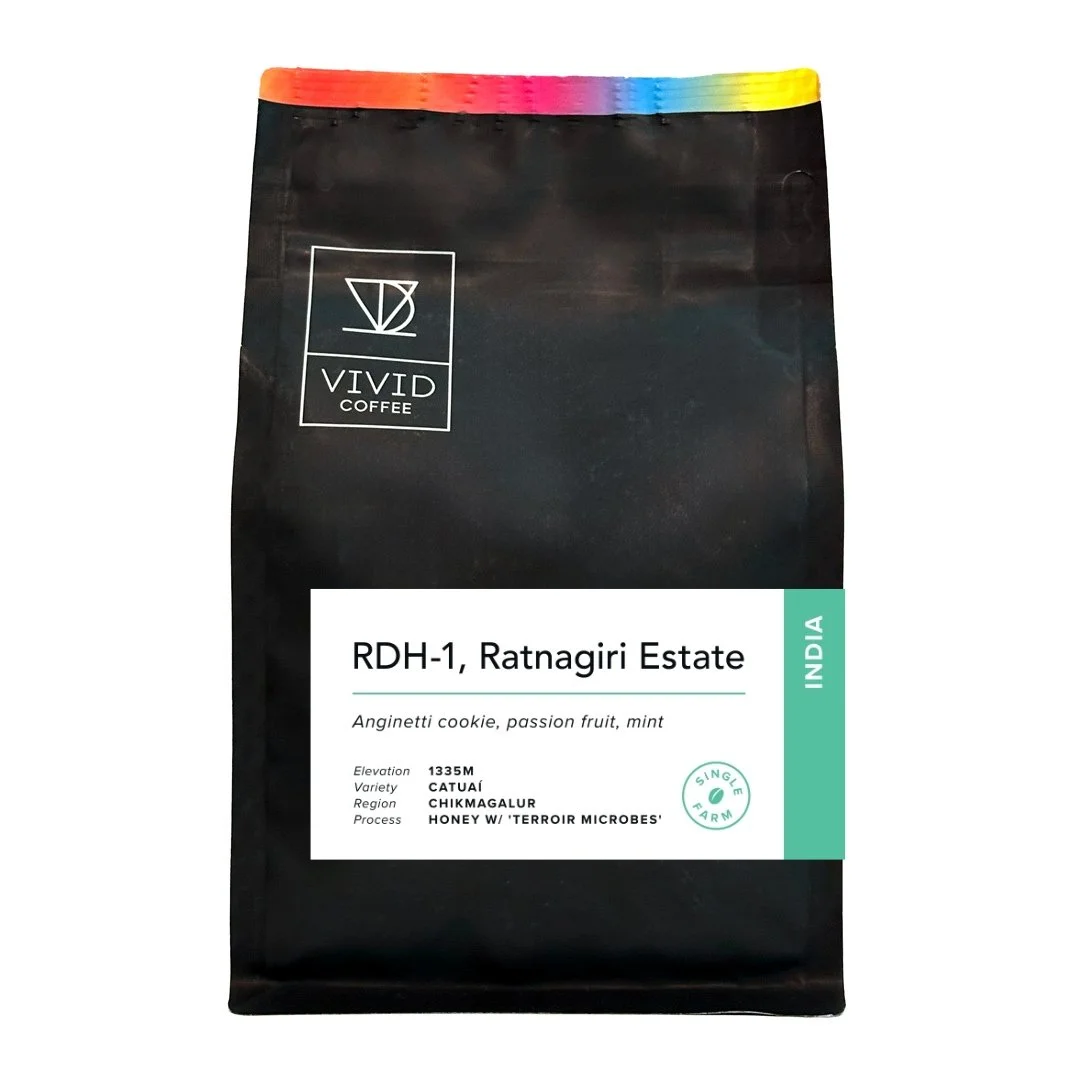
RDH-1 — Ratnagiri Estate, India
Catuaí · 1,335 m · Honey w/ Terroir Microbes
Chikmagalur, India
Tasting Notes: Anginetti Cookie, Passion Fruit, Mint
Ratnagiri Estate is one of the most fascinating coffee farms in India, and RDH-1 is a perfect example of why. This Catuaí lot combines the character of coffee grown in Chikmagalur with an unusually precise and experimental approach to fermentation, resulting in a cup that is both deeply sweet and strikingly expressive.
For this lot, Ashok Patre and his team fermented whole cherries anaerobically for 48 hours in biofermenters, adding what they call “terroir microbes.” Rather than relying entirely on the naturally occurring microorganisms present during fermentation, scientists collected leaf litter from Ratnagiri Estate and identified and propagated the native microbes found within the farm’s unique ecosystem. These cultures were then introduced into the fermentation, allowing the team to guide the process with microorganisms specific to the estate.
Following fermentation, the cherries were de-pulped using a demucilaginator and prepared for dry hulling. The wet parchment was then slowly dried for 29 days.
The result is a remarkably distinctive coffee. Anginetti cookie brings a rich, confectionary sweetness, while passion fruitadds bright tropical acidity and mint contributes a cool, herbal finish. It’s a coffee that demonstrates just how far thoughtful fermentation can push the expression of a single farm and variety.
About Ratnagiri Estate
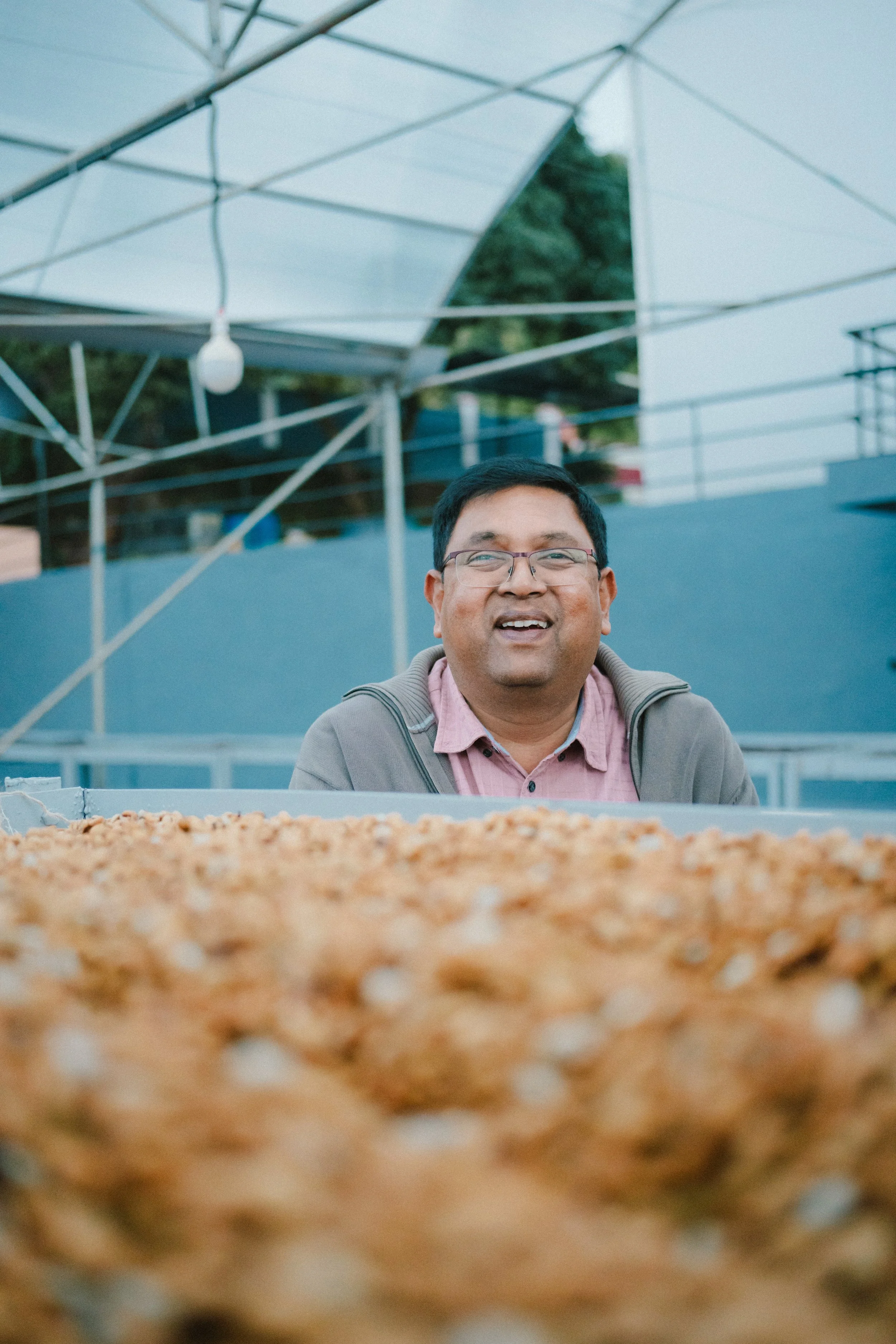
For nearly a century, the Patre family has stewarded Ratnagiri Estate, producing specialty coffee and fine pepper in the hills of Chikmagalur. Today, third-generation farmer Ashok Patre works alongside his wife, Divya, to build on that legacy while transforming the estate into one of the most innovative coffee operations in India—and anywhere in the world.
Ashok approaches coffee processing as both an art and a science. Recognizing the particular character of Indian coffee varieties and terroir, he has developed increasingly sophisticated methods for shaping fermentation and the flavors that emerge in the finished cup.
At Ratnagiri, fermentation is treated with an extraordinary level of precision. Ashok has collaborated with a renowned food scientist to develop bespoke processing equipment, while a dedicated team—including two microbiologists, one with a PhD—monitors fermentations through microbial plating, acidity measurements, and other scientific analysis. The goal isn't simply to ferment coffee differently, but to understand the process well enough to guide it with intention.
RDH-1 is a beautiful example of that philosophy: a coffee rooted in the land at Ratnagiri Estate, but pushed forward through curiosity, experimentation, and an impressive understanding of fermentation.